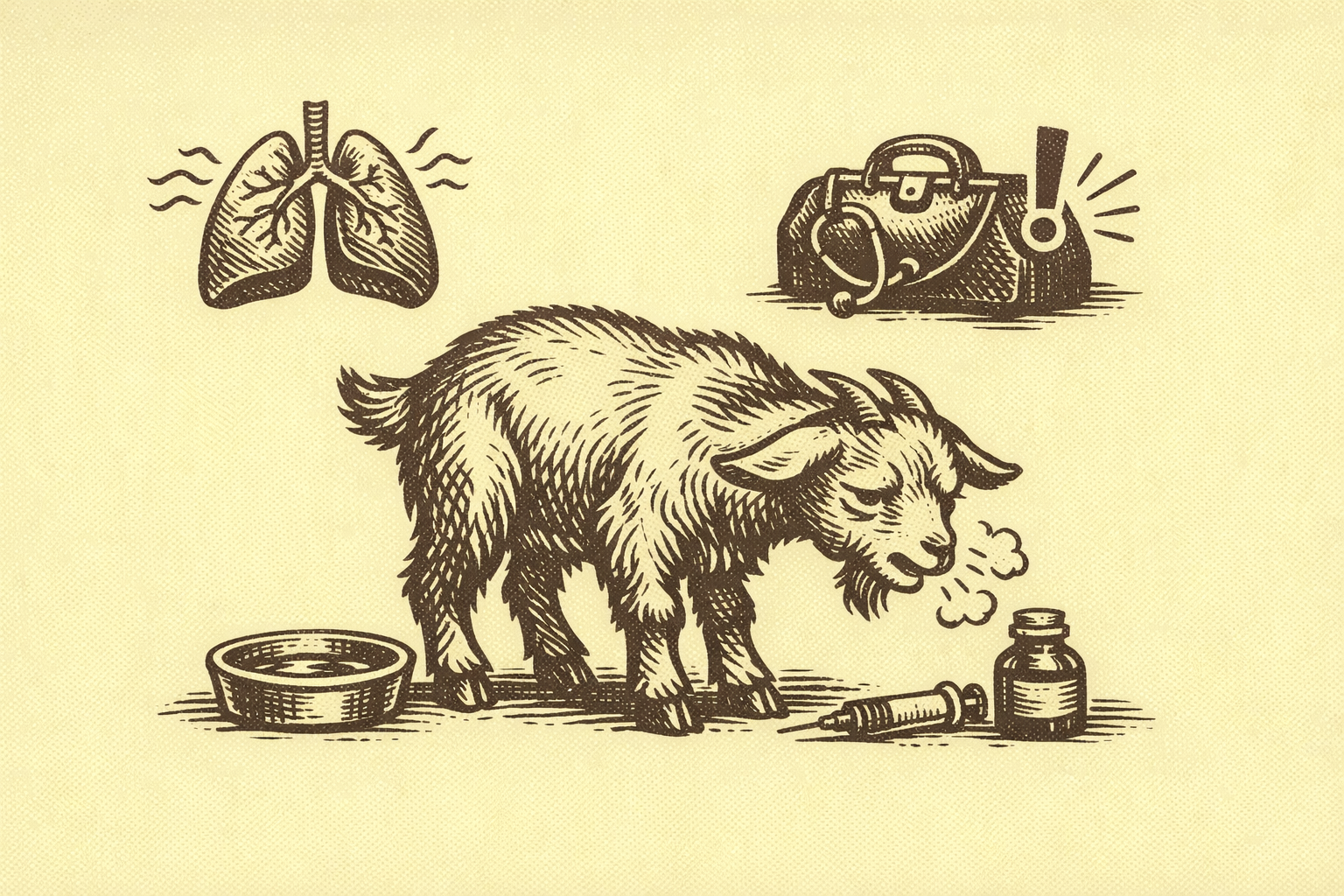

If you keep goats long enough, you’ll meet the sniffles. One day a wet nose and a little cough shows up, and you wonder if it’s just a drafty night or the start of something bigger. This guide walks you through what we look for on our own homestead, what you can do safely at home, and the clear moments to call a vet. 🐐
We wrote this for new and seasoned homesteaders who want practical, step by step help. No guesswork, no risky home meds. Just calm, simple checks and common sense care you can start today.
What’s in this Article
- A Quick Neighborly Take: What “a Cold” In Goats Really Means
- A Simple 2 to 3 Day Monitoring Plan
- Step-by-step: do this the right way
- FAQ
- First 10-Minute Check: Know How Sick Your Goat Is
- Barn Shelf Supplies That Make Care Easier
Success here looks like this: you spot early signs, you take a temperature and count breaths, you set up a warm and dry pen, you keep the goat drinking, and you pick up the phone quickly if red flags show up. Most mild cases improve with supportive care, but serious infections turn fast. Knowing the difference protects your animal and your wallet.
Before anything else, do this: move the goat to a quiet, draft-free pen where you can watch closely, then take a rectal temperature and count breathing for one minute. Write the numbers down. Those two data points will guide every next step.
Two limitations to keep in mind: very young kids and late-gestation does can decline faster than adults, and extreme weather can turn a mild bug into a crisis. When in doubt, call your large-animal vet early.
A Quick Neighborly Take: What “a Cold” In Goats Really Means
When “a Cold” Is Likely Mild
- Signs: clear nasal drip, occasional soft cough, normal appetite, normal energy, temperature 101.5 to 103.5 F, breathing 12 to 20 per minute.
- Why it matters: these goats often bounce back with warmth, hydration, and rest.
When It Is An Emergency
- Red flags: fever 104 F or higher, fast breathing over 40 per minute at rest, labored breathing with flared nostrils or open mouth, thick yellow or green nasal discharge, no interest in feed or water, blue or pale gums, collapse.
- Why it matters: these point to pneumonia or severe infection that needs a veterinarian now.
What We Can And Cannot Fix At Home
- Can do: isolate, warm and dry housing, oral electrolytes, gentle nutrition, humid air, nose cleaning, numbers-based monitoring.
- Cannot do: diagnose the exact germ, choose antibiotics, treat severe dehydration, oxygen therapy. Those need a vet and proper diagnostics.
A Simple 2 to 3 Day Monitoring Plan
Start Here: Minute-One Checklist
- Take temperature, write it down.
- Count breaths for one full minute while the goat is calm.
- Check hydration: skin tent on the neck should snap back in under 2 seconds, gums should be pink and moist, capillary refill under 2 seconds.
- Note discharge: clear and watery is lower concern, thick and colored raises concern.
- Separate the goat from the herd, set up dry bedding, block drafts, offer warm water.
Targets to remember:
- Temp: 101.5 to 103.5 F is normal. Above 104 F is a call-the-vet number.
- Breaths per minute: 12 to 20 is normal. Over 30 is concerning, over 40 is urgent.
Day 1: Reassess With Numbers
- Recheck temp and breathing morning and evening, log the trend.
- Watch appetite, cud chewing, and manure pellets. Skipped meals or no cud is a warning sign.
- Keep the pen dry, swap damp bedding, keep water fresh and within easy reach.
If numbers rise, or appetite drops for more than 12 hours, call the vet.
Day 2 to 3: Trending Better Or Call The Vet
- Improving: temp drifting toward normal, fewer coughs, steady appetite, normal energy. Continue supportive care.
- Stalled or worse: persistent fever, faster breathing, thicker snot, weakness, dehydration signs. This is vet time, even if the goat looks “okay” between coughs.
Edge cases to escalate sooner:
- Kids under 8 weeks, seniors, or late-pregnancy does.
- Heat waves or very cold snaps, which stress breathing and hydration.
Step-by-step: do this the right way
Before you start
- Quiet, dry pen ready for isolation with good ventilation and no drafts
- Digital rectal thermometer, lubricant, tissues or paper towels, disinfectant wipes
- Clean buckets, fresh water, and an electrolyte mix approved for livestock
- Good grass hay and a small amount of higher quality hay like alfalfa
- Watch or phone timer, notepad, and pen for vitals and notes
- Clean blanket or goat coat if the goat is chilled, and extra dry bedding
- Gloves and a simple footbath or boot brush for biosecurity
- A charged phone in case you need to call your vet quickly
1) Separate and settle the goat
- Move the sick goat to a dry, draft-free pen where you can observe it closely. Keep herd mates nearby across a fence to reduce stress.
- Troubleshooting: If the goat struggles to stand, collapses, or breathes with an open mouth, stop and call your vet immediately.
2) Take a quick baseline
- Note attitude, cough type, nasal discharge color, appetite, and manure. Snap a couple of photos and a short video of the breathing and cough. These help your vet later.
- Why it matters: Your notes are the early warning system. Trends over a few hours tell you if care is helping.
3) Check temperature the right way
- Lubricate the thermometer and take a rectal temperature for 30 to 60 seconds.
- Normal adult: about 101.5 to 103.5 F. Kids can run a touch warmer.
- Call the vet if: 104 F or higher, or under 100 F, or if temperature swings more than 1 degree in a few hours.
- Troubleshooting: Dirty thermometers can read low. Recheck if a number seems off.
4) Count breathing and watch effort
- With the goat at rest, count flank rises for 30 seconds and double it.
- Normal adult: roughly 15 to 30 breaths per minute.
- Red flags: over 40 breaths per minute at rest, nostrils flaring, neck stretched out, grunting, open-mouth breathing, or blue or gray gums. Call the vet now.
- Tip: Do this before you handle much. Handling can bump the rate.
5) Check hydration and gums
- Pinch skin over the shoulder or eyelid. It should snap back in 1 to 2 seconds. Check gum color and capillary refill by pressing a finger on the gum. Color should return in 1 to 2 seconds.
- Mild dehydration: offer oral electrolytes and monitor.
- Severe dehydration: skin tent over 3 seconds, dry or tacky gums, sunken eyes. Call the vet. This often needs fluids.
6) Make the pen warm, dry, and breezy, not drafty
- Deepen bedding, remove damp spots, and fix drips. Add a safe heat source only if the goat is chilled. Keep cords and lamps secured to prevent fires.
- Add humidity for comfort: run a humidifier nearby or park the goat in a steamy bathroom for 10 minutes with supervision.
- Troubleshooting: If humidity fogs the pen or bedding gets damp, you have gone too far. Aim for fresh air and comfort together.
7) Push fluids and easy feed
- Offer warm water and a bucket with electrolytes. Refresh often. Hand-feed good grass hay. A small amount of alfalfa can help with energy.
- Skip big grain meals while feverish. Small, frequent nibbles are better.
- Listen for gentle rumen gurgles on the left side. No sounds plus no appetite is a vet call.
- Safety note: Do not force-drench unless you are trained. Fluids in the lungs are dangerous.
8) Clear the nose gently
- Moisten a soft cloth with warm saline and wipe away crusts. For kids, a bulb syringe can help at the nostril opening only.
- Do not stick swabs deep into nostrils or pour liquids up the nose.
9) Record vitals every 4 to 6 hours
- Log temperature, breathing rate, appetite, water intake, and energy level. Note changes in cough or discharge color.
- If the goat is not equal or better by the next check, plan to call your vet within 24 hours. Worsening at any point is an immediate call.
10) Know when not to medicate at home
- Do not start antibiotics, dewormers, human cold meds, or essential oil nebulizing without veterinary guidance.
- Safe exception: oral electrolytes and basic anti-inflammatory comfort measures like warmth and rest. Anything else, ask first.
- Troubleshooting: If you have previously prescribed meds on hand, call your vet before using. The right drug and timing matter.
11) Protect the rest of the herd
- Wash hands, change or disinfect boots, and clean shared tools. Check every goat’s nose, breathing, and appetite during chores.
- Improve barn airflow, remove damp bedding, and spread animals out if crowded.
If you only do one thing
- Take vitals early, write them down, and use those numbers to guide your next move. Warm, dry housing and steady hydration buy you precious time, but fast vet help when you see red flags makes the biggest difference. When in doubt, call your large-animal vet and share your notes.
FAQ
Basics
Q: Can goats catch colds from humans?
A: Not usually. Human cold viruses are species-specific. You can still carry barn germs on your hands and clothes, so wash up, change jackets, and avoid face-to-face contact when anyone is sick.
Troubleshooting & Safety
Q: What breathing rate is an emergency?
A: Count breaths at rest for 30 seconds and double it. Adults: normal is 12–20 per minute. Kids: 20–40. Call a vet fast if an adult is over 40 at rest, there’s open‑mouth breathing, loud grunting, blue or gray gums, or the goat can’t stand comfortably.
Q: Is it safe to give leftover antibiotics or a dewormer “just in case”?
A: No. Misuse can hide pneumonia, cause resistance, and harm the rumen. Use electrolytes, warmth, and isolation at home. Medications, including anti‑inflammatories and antibiotics, should be prescribed by a vet after an exam.
Timeline & Recovery
Q: How long do goat respiratory infections last?
A: Mild upper airway irritation may improve in 24–48 hours with supportive care. If there’s no improvement by 48 hours, or any worsening at any point, call a vet. Confirmed pneumonia often needs 5–10 days of treatment and monitoring, sometimes longer. Keep isolated for at least a week after fever and cough resolve.
If you’ve read this far, you’re already doing the most important thing a goat owner can do: paying close attention. Respiratory bugs are common on small farms. Most are mild and pass with rest, warmth, and hydration.
The keys are simple. Check vitals, protect from drafts, keep water and calories coming, and separate the goat so you can monitor. Call the vet fast if breathing is hard, fever is high, or the goat stops eating.
You’ve got this. A calm plan beats panic. Start with the quick check below, then follow the short action plan and stock a few barn basics so you’re never scrambling.
First 10-Minute Check: Know How Sick Your Goat Is
Vitals To Grab
- Temperature: normal is 101.5 to 103.5 F
- Respiratory rate: normal is 15 to 30 breaths per minute at rest
- Attitude and appetite: bright and eating is good, dull or off feed is a concern
- Hydration: gum moisture and skin tent at the neck should snap back fast
- Nasal discharge: clear and small amounts is often mild, thick green or foul is more serious
- Cough and breathing effort: quiet belly breathing is normal, open-mouth breathing or grunty effort is urgent
How To Read The Results
- Mild and manageable at home: temp under 104, breathing not labored, still eating and drinking, bright enough to move with the herd
- Vet today: temp 104 to 105 with dullness, thick colored discharge, fast breathing over 40 at rest, not eating
- Emergency now: temp over 105, open-mouth breathing, blue or very pale gums, collapse or inability to stand
Decision Recap
- Choose home care if the goat is eating, breathing comfortably, and fever is low grade
- Choose a vet call if appetite drops, fever climbs, or breathing rate rises
- Choose emergency help if there is open-mouth breathing, high fever over 105, or the goat is down
Barn Shelf Supplies That Make Care Easier
Core Basics To Keep On Hand
- Digital rectal thermometer with a dab of lubricant and alcohol wipes
- Electrolyte mix labeled for livestock and a couple of oral dosing syringes
- Dedicated water bucket and a small pan for warm mash or soaked hay pellets
- Extra dry bedding and a simple draft barrier for one stall corner
- Clean towels and a headlamp for hands-free checks
Nice-To-Have Extras
- Clip-on fan to move stale air, aimed high and never directly at goats
- Humidity help: bathroom steam session or a safe room humidifier outside the pen
- Nebulizer only with vet guidance on what to use in it
- A basic notebook to log temps, breathing rate, and appetite at each check
48-Hour Action Plan
- Hour 0: Isolate the goat, get a baseline temp and breathing rate, offer warm water with electrolytes
- Every 6 to 8 hours: Recheck temp and breathing, note cough and discharge, refresh water and hay
- Twice daily: Clean nose gently, swap in dry bedding, keep the pen draft free but ventilated
- Feed: Small, frequent access to good hay, add a bit of soaked pellets if appetite is light
- Call the vet if numbers trend the wrong way for 12 to 24 hours or any red flag appears
Edge Cases To Keep In Mind
- Young kids under 8 weeks and frail seniors can crash faster. Call sooner if they run a fever or stop nursing
- Late-gestation does need careful heat management. Avoid overheating and do not start new meds without a vet
- Hot, humid weather can look like respiratory distress. Shade and airflow are part of treatment
- Parasites can mimic respiratory strain by causing anemia. Pale eyelids are a clue to ask your vet about fecal testing
You don’t have to fix everything at once. Start with the vitals, make the pen comfortable, and keep sips and calories going. If numbers or behavior slip, bring in your vet. That steady, step by step approach keeps most goats on the road to normal breaths and bright eyes. Here’s to quiet barns and healthy noses soon 🐐